
Debt Digest | Tariffs Overturned, Long-term Deficits Largely Unchanged
Links & Fiscal Facts


Here are this week’s reading links and fiscal facts:
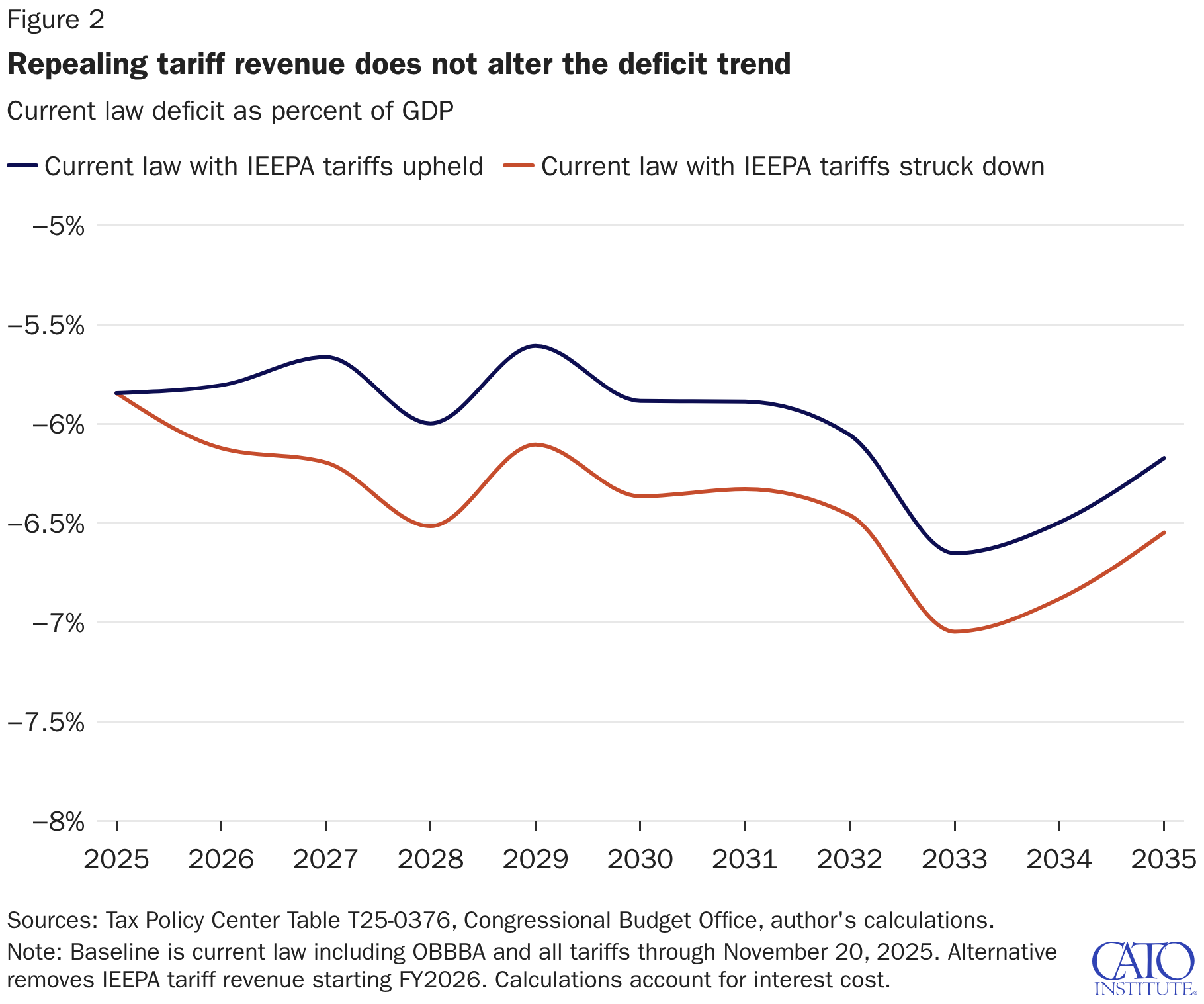
Supreme Court takedown of tariffs gives Americans tax relief and does not meaningfully alter the long-term fiscal trajectory. Cato’s Adam Michel and Santiago Forster explain: “The tariffs modestly increased revenue but did not meaningfully improve the government’s long-term budget outlook. They reduced economic growth, shrank other sources of tax revenue, and offset a substantial share of the administration’s signature tax reforms.” As seen in the figure below, “Without IEEPA tariff revenue, deficits are, on average, less than half a percentage point of GDP larger, but this does not alter the underlying trajectory of the continuously widening deficit.” The Supreme Court ruling is welcome, as “tariff costs offset a majority of the average $3,736 tax cut Americans are projected to receive in 2026 from the OBBBA. […] Overturning the IEEPA tariffs will allow more Americans to fully benefit from the 2025 tax cuts.”
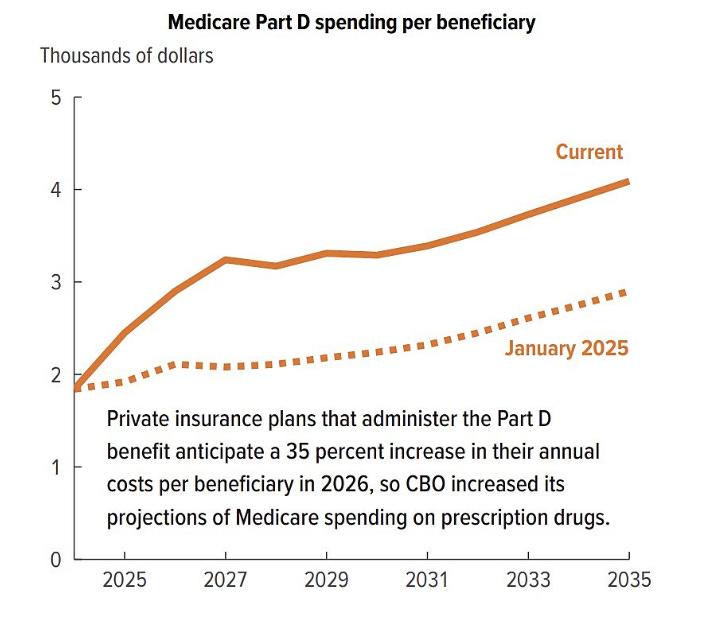
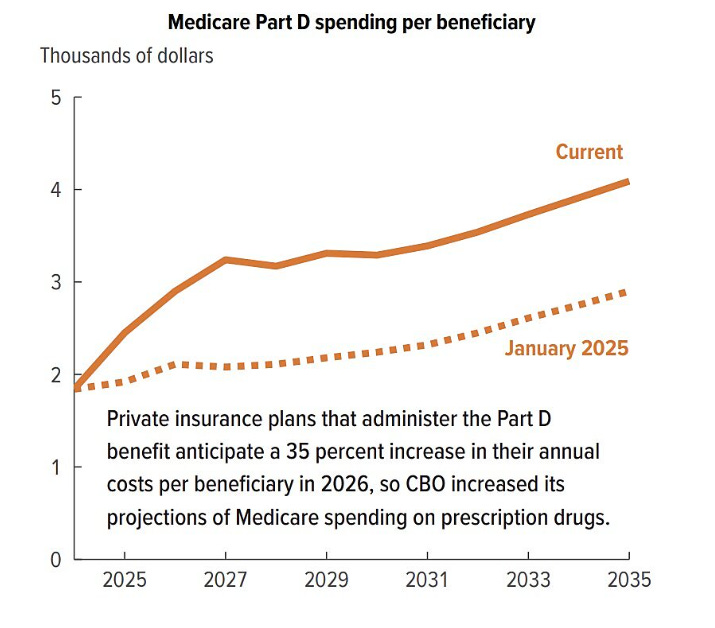
CBO projects $600 billion increase in Part D spending. Cato’s Michael Cannon discusses the latest CBO report in which, “Part D spending per beneficiary in 2035 is now projected to be more than $4,000, up from less than $3,000 in the January 2025 baseline,” for an increase of $600 billion over 10 years. Cannon explains, “parts of the [Inflation Reduction Act] IRA would have the effect of increasing Medicare drug spending, at least in the initial years. In particular, the IRA took multiple steps to insulate Medicare enrollees even further from the cost of their own drug consumption. Those provisions would predictably increase their drug consumption and Medicare spending.“ This $600 billion increase goes straight on the national credit card and adds to the debt on autopilot. As Boccia and Thakur write, Medicare Parts B and D are “set up to take whatever [qualifies] from taxpayers—no limits, no debate.”
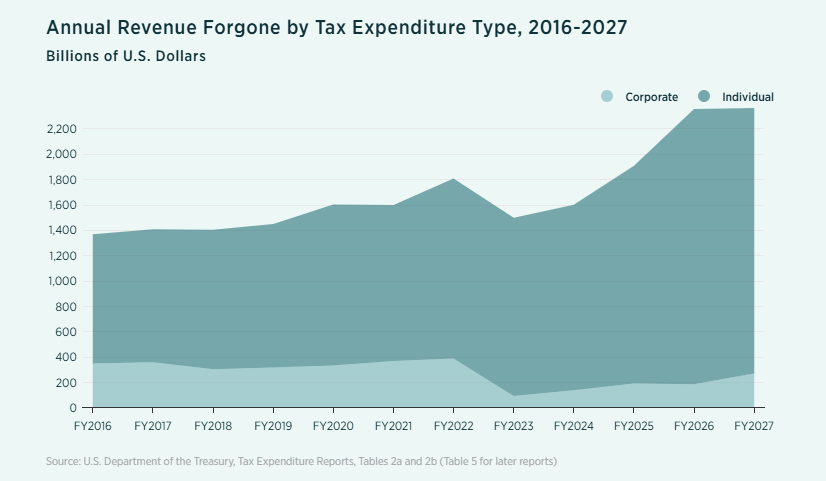
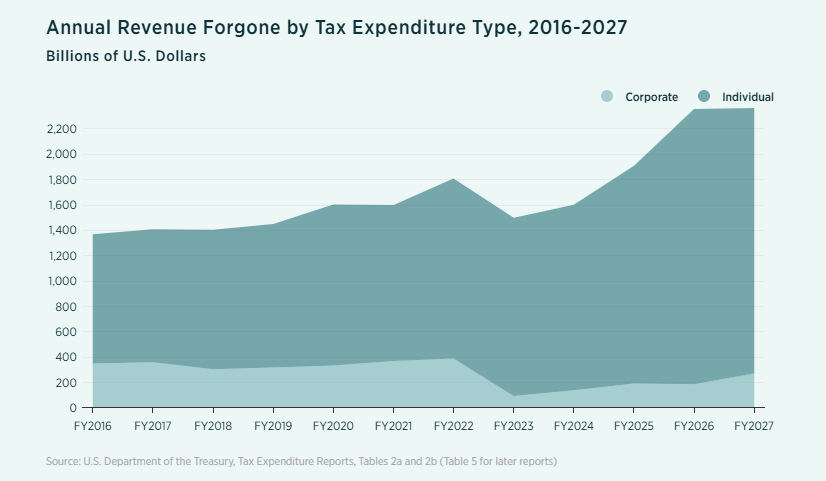
Tax expenditures are government spending hiding in the tax code. Mercatus’ Jack Salmon explains, “Since 2000, the number of tax expenditures has grown from roughly 130 to 175,” yet “this tax spending is rarely debated as spending programs, even though tax expenditures function exactly like direct spending programs. They allocate resources, favor specific groups, distort markets, and impose real fiscal costs, just without the visibility of appropriations. […] The result is a shadow budget that grows automatically and almost never faces trade-offs.” Salmon highlights how budget gimmicks compound the problem: “Provisions are sunsetted to reduce their apparent cost, and phase-ins push costs outside the budget window. Expiring policies are also routinely extended under the fiction that they reflect ‘current policy’ rather than new legislation.” Salmon concludes, “The tax code today […] allows spending without budgeting, permanence without accountability, and expansion without choice.” He points to a better system, “a broad tax base that does not penalize saving or investment, with few preferences beyond a personal deduction and limited provisions to avoid double taxation of saving.”
Congress reasserts the power of the purse in new spending package. Catie Edmondson reports in the New York Times: “Dozens of measures sprinkled throughout the recently enacted spending package seek to tie the Trump administration’s hands on funding, an act of quiet bipartisan resistance to efforts to trample congressional power.” Some provisions “bar the shuttering of federal offices,” while others move spending instructions into binding bill text that “previously would have been written only in the nonbinding reports that accompany spending legislation, which previous administrations have generally honored as law.” This is a welcome step toward restoring the constitutional balance of power over federal spending. As Boccia and Lett emphasize, “Legislators should not abdicate their constitutional responsibilities to control the federal purse strings and rely on the executive to handle a crisis Congress created.” They warn that “expansions of presidential power today will be taken advantage of by future administrations, regardless of party, at the expense of liberty for all.” The principled stance: Even when executive actions may reduce spending in the short run, Congress—not the president—must control federal expenditures.
Military buildups permanently expand government spending. In a new CESifo working paper, Johannes Marzian and Christoph Trebesch study 114 military spending booms across 20 countries since 1870 and find that rearmament leads to lasting increases in taxes and government spending---not temporary wartime surges that reverse. Contrary to the classic “guns versus butter” tradeoff, the authors “find little evidence that social spending is cut during military expansions. Instead, when societies rearm, they tend to choose guns and butter, resulting in higher debt, expenditures, and taxes.” The fiscal legacy is persistent: “more than a decade after boom onset, average real tax revenues remain 20 to 30 percent higher, and top marginal income tax rates remain 10 to 20 percentage points higher.“ Boccia and Nachkebia highlight an article by Chris Pope noticing this trend in Europe around WWII: “The war provided European governments with the opportunity to expand the role of government in benefit provision across the social classes and raise taxes with minimal resistance.” They conclude, “Pope’s article serves as a timely warning for the US where the unchecked growth of the major entitlement programs combines with calls for entitlement expansions, following a massive expansion in social spending during the COVID-19 pandemic.”