
Welfare Digest | Building a Wall Around the Welfare State
Links & Benefits Breakdowns



Here are this week’s links & benefit breakdowns:
Building a Wall Around the Welfare State. Representative Grothman (R-WI) issued a press release reintroducing the Safeguarding Benefits for Americans Act (H.R. 7213) yesterday. This bill would prevent all noncitizens from receiving federal welfare and entitlement benefits and establish stricter verification measures. As Cato scholar Alex Nowrasteh points out, Grothman’s bill “would save over $125 billion in the first year by ending noncitizen access to welfare,” and provide a “better long-term strategy to support immigrant self-sufficiency and protect taxpayers than any other alternative. It’s high time that the government build a big beautiful wall around the welfare state.”
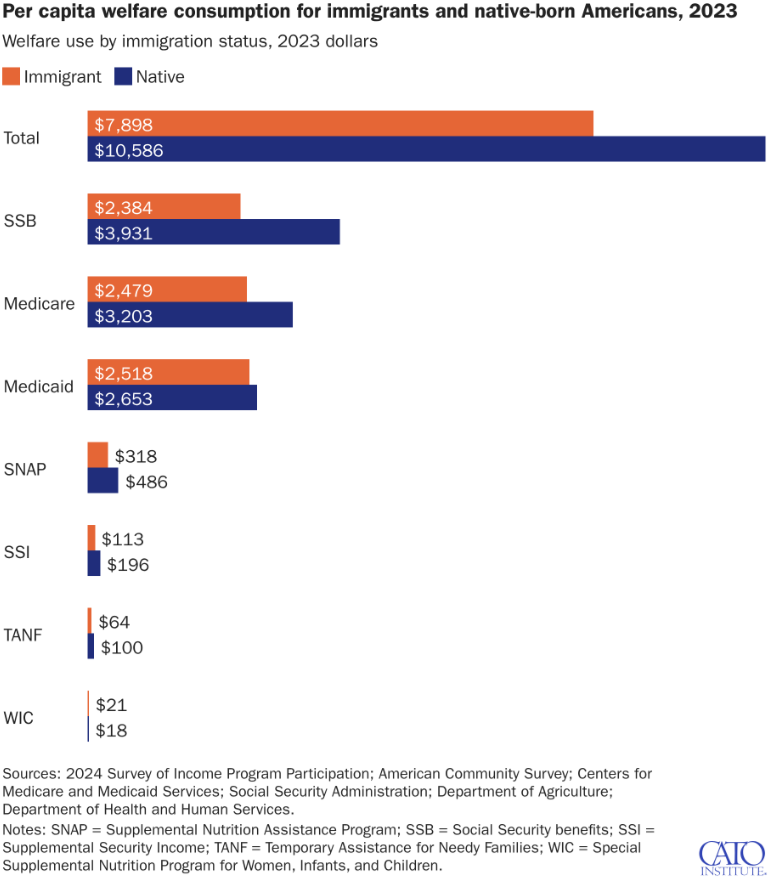
Immigrants Consume Less Welfare Compared to American Citizens. As Cato scholars Alex Nowrasteh and Jerome Famularo point out, immigration debates “often hinge on claims that immigrants are heavy welfare users.” But their recent paper shows that this isn’t true. Using Survey of Income and Program Participation (SIPP) data, they found that “all immigrants individually consumed an average of… 24 percent less” welfare benefits than native-born Americans in 2023. Immigrants are also “less likely to enter the welfare system, less likely to remain on welfare for long periods, and less likely to age into the most expensive entitlement programs.” These differences in welfare consumption largely reflect life-cycle effects, since “many immigrants arrive younger, age into entitlement programs later, and naturalize only after many years in the United States.” Nonetheless, immigrant welfare use remains a concern for many American voters. As Nowrasteh argues, preventing noncitizens from accessing welfare will address these concerns while saving taxpayers billions of dollars and preserving the economic benefits of immigration.
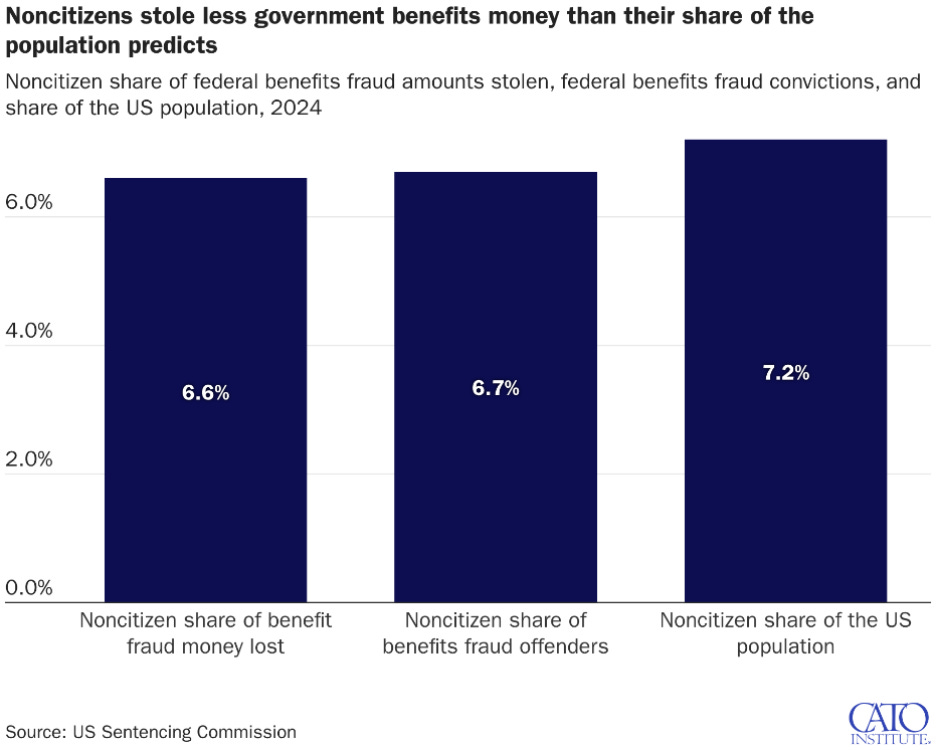
Noncitizens Were Underrepresented in Welfare Fraud Convictions in 2024. Welfare fraud among Somali immigrants in Minnesota has “led to demands for broad immigration restrictions,” writes Cato scholar David Bier. However, “the most recent data available show that noncitizen immigrants are less likely than US citizens to commit and be convicted of welfare fraud.” Per US Sentencing Commission data, “a noncitizen was about 28 percent less likely to receive a benefit fraud conviction” that imposed costs on the government compared to native citizens. They also “stole less, in absolute dollar terms, than the US citizen thieves per capita in 2024.” Fraud offenses among noncitizens have also “declined by 57 percent” over the last decade, while US citizen offenses “have grown by 63 percent” over the same period. Rather than “walling off the country to new legal immigrants,” says Bier, “Congress and the states should build a stronger wall around the welfare state” to encourage immigrants to “support themselves independently of the government.”
Cutting Welfare Access Didn’t Push Immigrants into Poverty. The 1996 welfare reforms heavily restricted noncitizen access to most forms of public assistance, leading to a sharp decline in the welfare participation rate among immigrant households. In 2016, economist George J. Borjas analyzed how these restrictions impacted immigrant poverty rates using Annual Demographic Supplements of the Current Population Surveys data from 1995 to 2001. Borjas found that immigrant households “most likely to be adversely affected by the new restrictions significantly increased their labor supply” (worked more hours or increased workforce participation), which drastically raised their earnings. This “allowed affected families to more than offset the adverse impact of the welfare cutbacks on family income.” As a result, despite being largely cut off from most welfare and entitlement benefits, poverty rates among the affected immigrant population after the 1996 welfare reforms remained largely stable. In some circumstances, “poverty rates actually declined slightly in this group.”